Public procurement leaders announced in Lithuania – Energy Cells among them
2025-11-21


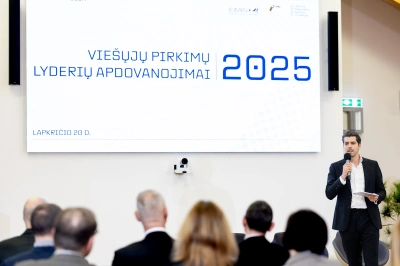
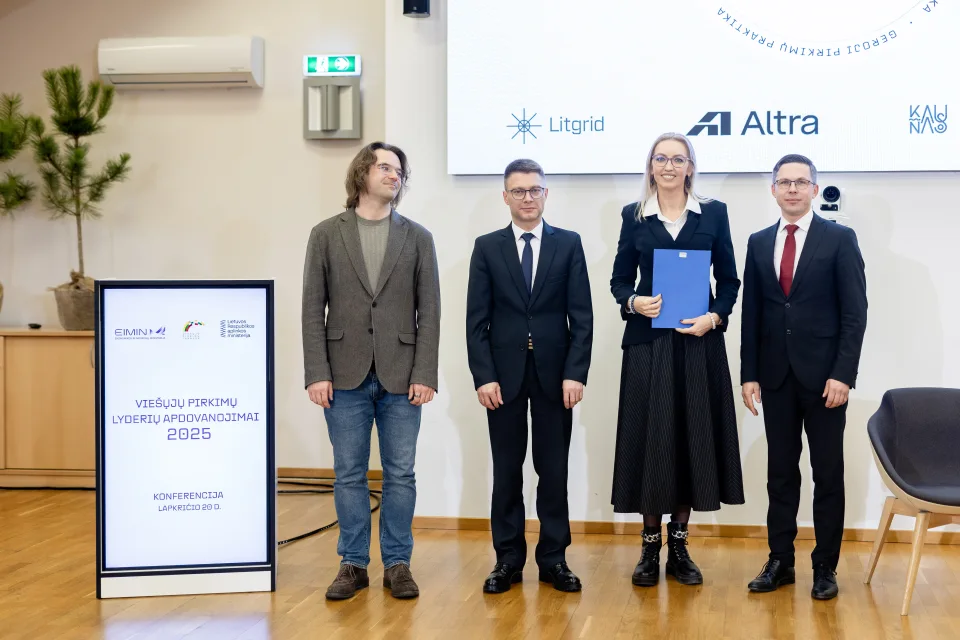
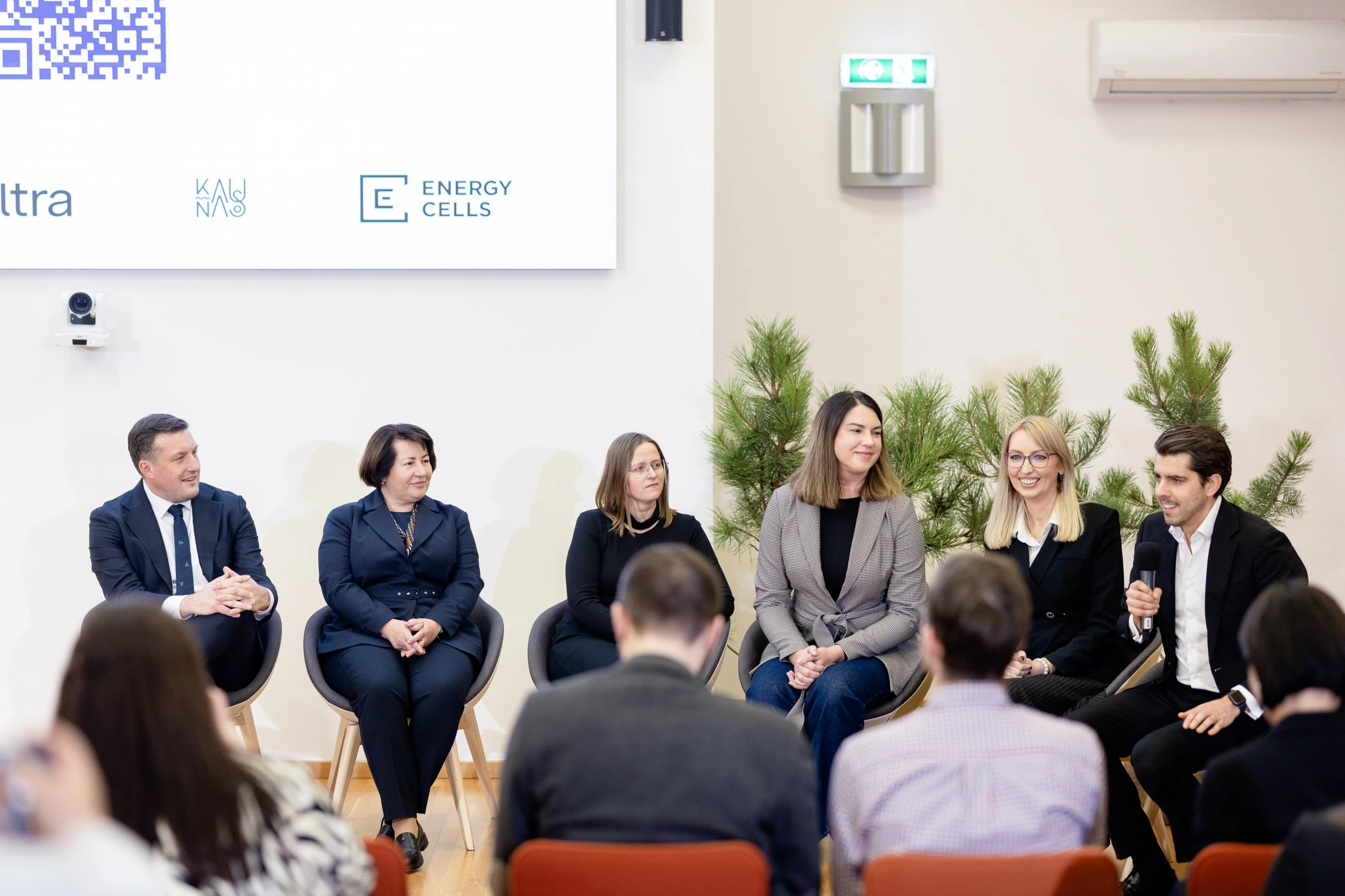
Yesterday, the Ministry of the Environment, together with the Ministry of the Economy and Innovation and the Public Procurement Office, announced the winners of Lithuania’s Public Procurement Leaders competition. A total of 11 organisations and companies were recognised, including EPSO-G Group companies Amber Grid, Energy Cells and Litgrid, whose public procurements were acknowledged as the best in Lithuania.
“This recognition is the result of hard work, consistent motivation and tremendous initiative. I am happy and proud of all EPSO-G Group procurement teams, who continuously look for efficient solutions and raise the bar for public procurement quality not only within the Group, but across the entire Lithuanian public sector,” says the Group’s Head of Procurement, Megana Margytė-Maksimiak.
The annual Public Procurement Leaders awards are a unique opportunity to recognise Lithuanian organisations that demonstrate the ambition to find better solutions, the courage to experiment, and through their work strengthen the culture of public procurement in Lithuania. This year, public procurement leaders were selected in four categories: innovative procurement, socially responsible procurement, green procurement, and best procurement practice.
In the Best Procurement Practice category, organisations were recognised for the effective application of bid evaluation criteria or contract management practices.
In this category, Energy Cells was recognised for applying an environmental quality criterion in an electricity procurement process – assessing not only price, but also the CO₂ emissions savings offered by suppliers. The selected model made it possible to measure, in real terms, how much emissions can be reduced by using electricity from renewable sources: the supplier provided quarterly CO₂ savings reports, allowing the company to track the actual environmental impact throughout the contract period. In this way, the procurement became not a formal “price and quality” assessment, but a practical tool for reducing pollution and encouraging more sustainable energy choices. Energy Cells demonstrated that even a relatively modest environmental commitment in public procurement can deliver tangible results and serve as a catalyst for broader change in the energy sector.
In the same category, Litgrid also received an award for applying a smart qualitative evaluation criterion – delivery time – in response to threats and urgent needs caused by the war in Ukraine, which required the rapid procurement of backup electricity transmission infrastructure equipment. The company introduced this criterion for the first time as part of the economically most advantageous tender evaluation, prioritising suppliers able to deliver equipment faster. This allowed critical equipment to be procured several months earlier while maintaining price rationality. This practice helped achieve the key goal of ensuring faster system readiness in emergencies and strengthening Lithuania’s energy security.
In the Innovative Procurement category, organisations were recognised for how they promote innovation and its development.
Amber Grid was recognised for an innovative solution to monitor the protection zone of main gas pipelines using satellite data. Instead of traditional physical inspections, satellite imagery, radar and multispectral data were used to remotely detect any changes in the pipeline zone. Automated algorithms identified potential violations, indicated their location, calculated the distance to the pipeline and assigned a criticality level. This reduced the need for manual work, increased accuracy and ensured faster response. Specialists visited sites only when satellite data indicated a real risk – allowing violations such as hay storage above the pipeline or construction works nearby to be detected and verified. The solution also had an environmental benefit: it reduced the number of physical trips, transport costs and CO₂ emissions, and caused less disturbance to sensitive areas.
Litgrid was awarded for implementing innovations for effective monitoring through the procurement of the “NordBalt” monitoring system using Distributed Acoustic Sensing (DAS) technology. This system enables much faster identification of the location of a “NordBalt” cable fault, thereby reducing potential economic consequences for the state. The new system detects vibrations and other signals along the cable and can reduce fault search time by up to 70%. This is particularly significant, as one day of “NordBalt” downtime can cost Lithuania around EUR 143,000. Faster fault detection means savings in the millions and lower risk to electricity supply security.
Congratulations to the Group’s procurement team colleagues!